Of course, the highly embarrassing mistakes about Rennes-le-Château – in itself a highly irrelevant subject matter since it is ignored by professional historians – is not the only such waste of time.
Since the early 20th century, historians around the world have concentrated solely upon the myth of the First Century Gospels – in response to the German Protestant sceptical Theologians – beginning during the 19th century – who openly announced that the Gospels were in fact only first mentioned by Christians themselves in 150 CE.
Take for example the book by Bart D. Ehrman, Did Jesus Exist? The Historical Argument For Jesus of Nazareth (HarperCollins, 2012). Not only does the author omit the fact that the Christians themselves did not mention the Gospels before 150 CE, but he concentrates only upon modern authors who deny the historicity of Jesus Christ – the denial of the historicity of Jesus Christ by Christianity itself is placed on the back burner by the author – thus revealing that he had an axe to grind from the outset before even writing his book – and therefore without making any objective research into Christianity.
Put simply, there were Christian sects that denied the historicity of Jesus Christ and this is no better illustrated than by the existence of the Nag Hammadi Codices. These Christian Sects were eventually eliminated by force by rival Christians during the early centuries and then later during the 12th century.
The position held by modern deniers of the historicity of Jesus Christ comes from different positions and depends upon each individual author concerned. The argument has never really been convincing. But let’s be consistent – the Mainstream Christian position itself cannot be sustained!
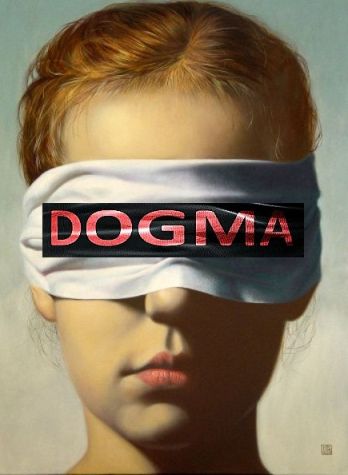
The dogmatic belief as held by the professional historians that the Gospels date from the First Century is found in every book – and it is a dogma that must be upheld by every historian. Of course this breaks the very code of objective historical research.
There is of course another taboo that the historian is forced to abide by. The subject matter of hallucinogenic drugs and the role they played in the origin of Christianity. Christianity inherited this from Judaism and let’s admit for arguments sake that Jesus Christ really existed – his very existence alone would only be secondary to the existence of any sacred knowledge of hallucinogenic drugs and the role they played in the origin of Christianity.
The central aspect of the early Church was the Ceremony of the Mass and each member of the congregation had to believe that the Sacrament was literally the flesh and blood of Jesus Christ known as Transubstantiation. Yes, this became formulated dogma in 1215 at the Fourth Lateran Council under the leadership of Pope Innocent III – but it really was only the consolidation of existing belief as held by the earliest Christians as described in their earliest literature.