Babylonian Cult of The Dead & French Penitential Movement
8 November 2026
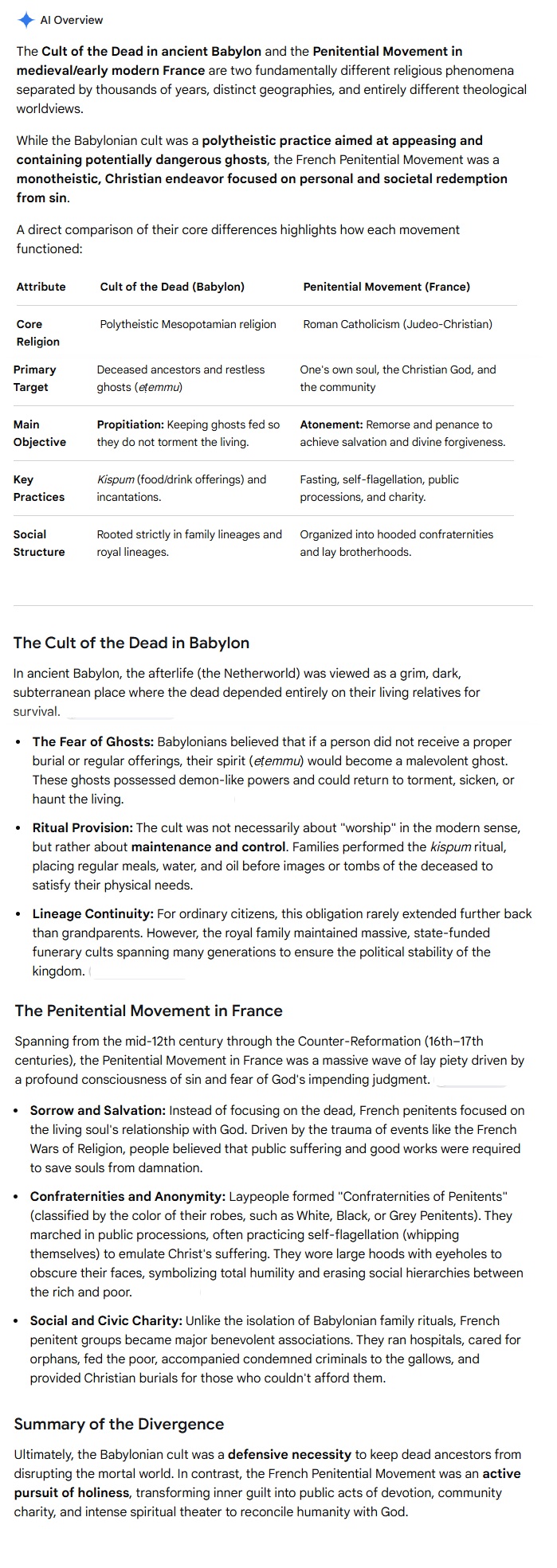
Roughly 1,500 to 3,000 years divide the historical eras of ancient Babylon and the medieval French penitential movements, depending on the specific centuries being compared:
Babylonian Cult of The Dead: Ancestor veneration and funerary rituals (kispum) were heavily practiced throughout Mesopotamian history, peaking across the Old Babylonian period (c. 1894–1595 BCE) through the Neo-Babylonian Empire (626–539 BCE).
French Penitential Movements: Public acts of self-mortification, heretical asceticism, and localized penance (such as the Cathars or the later Flagellant brotherhoods) emerged predominantly during the High and Late Middle Ages, between the 11th and 14th centuries CE (c. 1000–1350 CE).
Context in Alternative History
The specific phrasing linking these two highly distinct eras stems from fringe historical theories popularized in esoteric literature, most notably in books like “The Rise: Saunière's Magical Workings and the Penitential Movement in Europe” by Isaac Ben Jacob and Sarah Fishberg. These narratives claim that a subterranean network of heretical European groups preserved occult traditions originating directly from ancient Babylonian mortuary cults. Mainstream historians, however, view medieval Christian penitential rites as a response to contemporary European plagues, religious crises, and orthodox theology rather than a direct continuation of ancient Near Eastern practices.

|