General Boulanger & The Monarchists
3 May 2026
Updated 14 May 2026

General Georges Boulanger turned toward a pro-monarchist and anti-Republican stance primarily due to political pragmatism, a need for funding and electoral support, and personal alienation from the moderate republican government that dismissed him. While initially supported by the left, he became a “man of the hour” for all sides opposing the Third Republic, leading to secret deals with royalists to fund his movement and advance his political ambitions.
Following his removal as Minister of War, Boulanger needed resources to sustain his growing popularity and electoral campaign. Monarchists, who were desperate to topple the Third Republic, provided large sums of money – notably from the Duchesse d'Uzès – and coordinated support in exchange for his promise to help restore the monarchy.
After becoming too popular and threatening to the moderate government – largely due to his nationalistic “revanche” rhetoric against Germany – Boulanger was dismissed from his ministry, sent to a provincial command, and later retired from the army. This forced him into the camp of the opposition.
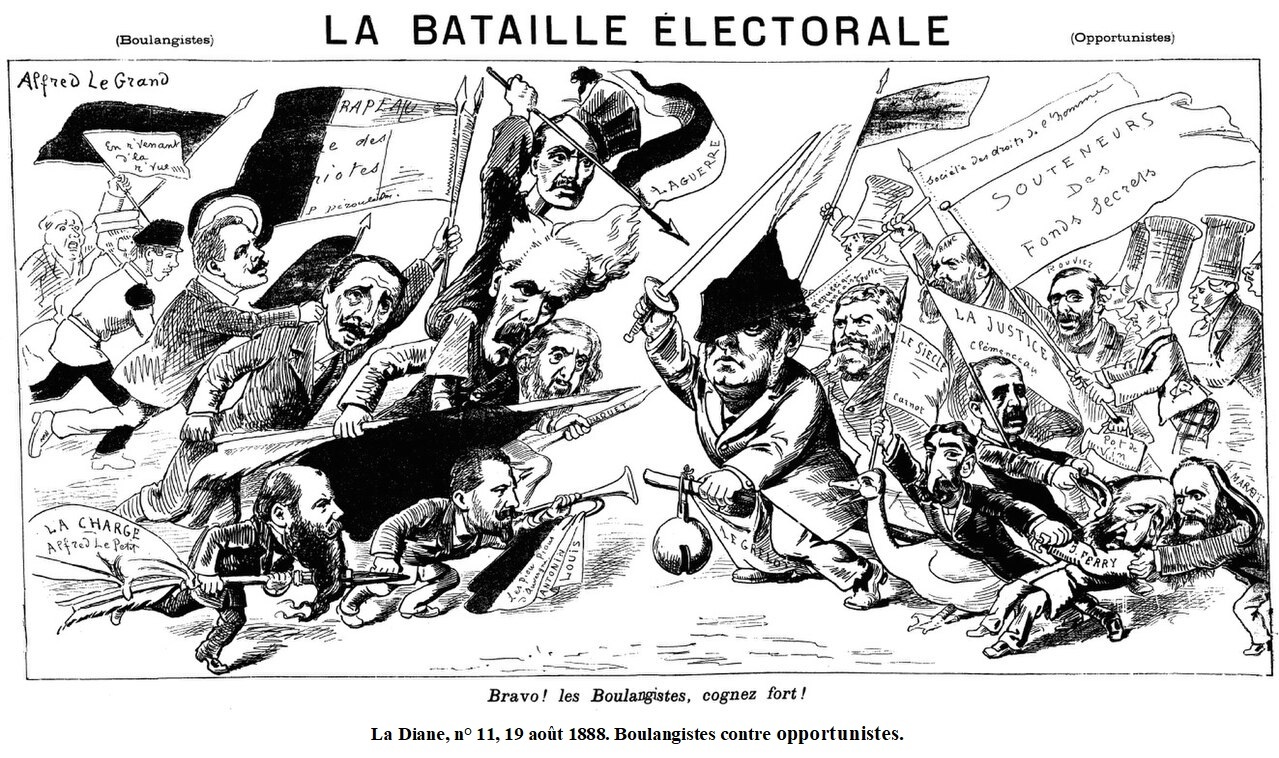
Boulangism was a populist movement that brought together far-left radicals, nationalists, Bonapartists, and royalists. To unite these disparate groups, Boulanger became anti-Parliamentary, attacking the “opportunist” republican leadership as corrupt.
Despite entering politics under radical republican backing, Boulanger was fundamentally an authoritarian and a populist rather than a committed republican. His primary goal was to take power, leading him to adopt whatever political stance was necessary, eventually aligning with the right-wing elements that supported him.
Between 1887 and 1888, secret agreements were made with royalist leaders to back him in elections in exchange for supporting a potential restoration of the throne.
By 1889, Boulanger was essentially a “tool” for monarchist, Bonapartist, and right-wing nationalist forces aiming to destroy the parliamentary Republic, despite his earlier popularity among working-class voters on the left.
In 1889, the primary expression of the French right-wing was not a single manifesto but the “Boulangist” movement, which coalesced around General Georges Boulanger and the League of Patriots (Ligue des Patriotes).
The central platform was an intense desire for revenge against Germany following the 1870 defeat and the loss of Alsace-Lorraine. The movement aimed to overthrow the moderate parliamentary Republic, which it viewed as weak, corrupt, and inefficient.
Supporters rallied around the idea of a charismatic, authoritarian leader (General Boulanger) to restore national pride and order. The movement framed itself as the champion of the French Army, positioning it against political elites. It blended dissatisfaction among various social groups – including those hurt by economic changes – under a “National-Populism” banner.
In 1889, the movement reached its peak, with supporters urging General Boulanger to seize power via a coup d'état. The Boulangists mounted a massive electoral campaign, winning seats in the Chamber of Deputies.
Faced with prosecution for undermining the state, Boulanger fled to Belgium, causing the movement to collapse, though it provided a foundation for future far-right movements in France. This period is recognized as a crucial moment in the development of the French radical right, combining xenophobia, nationalism, and authoritarianism.
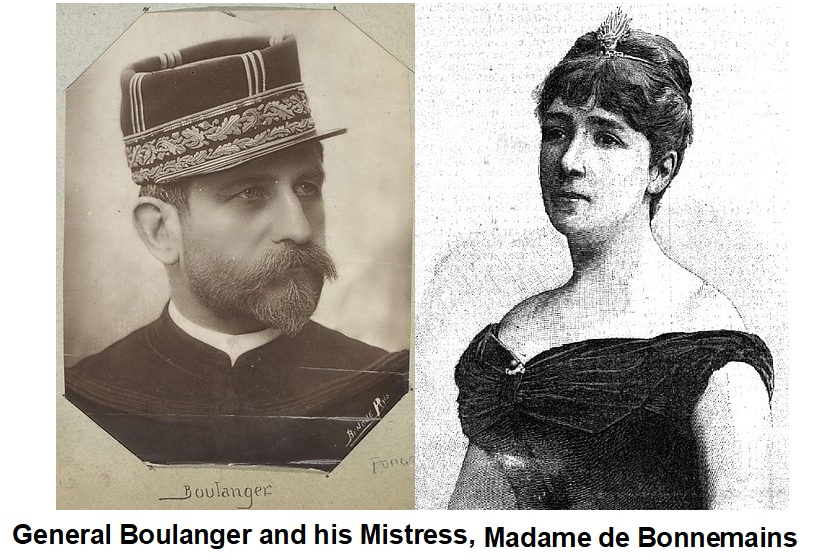
Ultimately however, the real love of Boulanger’s life was his mistress, Madame de Bonnemains and he killed himself, by her grave in Ixelles Cemetery in Brussels, Belgium on 30 September 1891, aged 54. Boulanger reportedly said before pointing his gun to his head: “How was I able to live two and a half months without you!” (Comment ai-je pu vivre deux mois et demi sans toi!). His mistress had passed away from tuberculosis on 16 July 1891.

|